
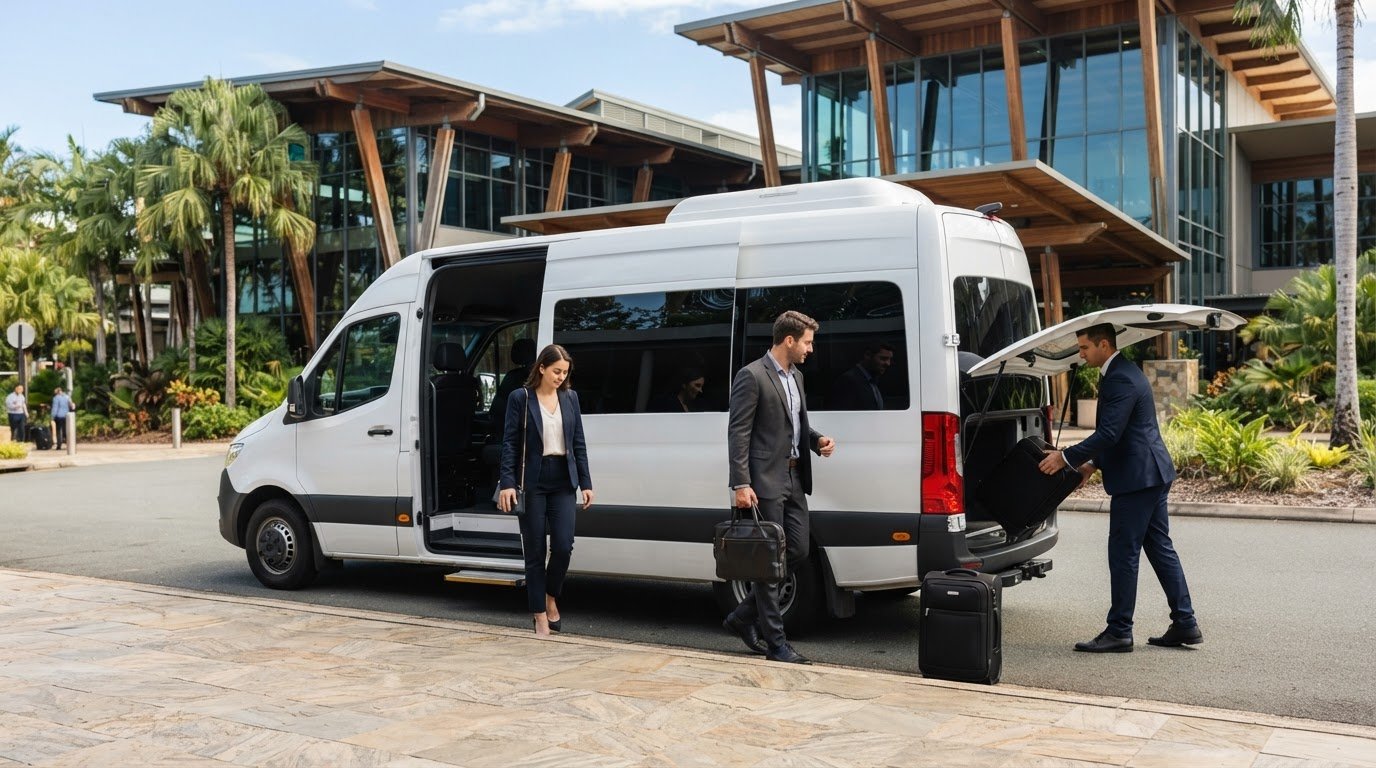
A delegation lands after a long flight, with meetings ahead and onward transport to arrange. Booking a professional chauffeur for a corporate delegation in Australia means planning private, driver-included transport around the group’s itinerary, with a suitable vehicle for its passengers and luggage.
A comfortable ride is only part of the arrangement. Clear booking details, reliable coordination and an organised way to manage transport all matter. Planning airport pickups, transfers between meetings and regional journeys in advance helps keep business travel on track.
This guide explains what corporate chauffeur service can include, how business accounts and invoicing work, and how to match vehicle options to your delegation. It also covers the support and cancellation details to understand when planning. You’ll have a clearer picture of what to arrange and what to expect from a professional service in Australia.
Key Takeaways
- See how a corporate account and consolidated invoicing can help organise travel bookings and administration.
- Match the vehicle to your delegation’s passenger numbers, luggage and itinerary.
- Know which booking and cancellation details to clarify when arranging corporate transport.
- Learn how professional conduct and punctuality support a smoother trip between airports, accommodation and business appointments.
- Understand how pre-booked private transfers can support delegation travel across Australia.
Corporate accounts and consolidated invoicing
For corporate travel in Australia, plan who can authorise bookings, which pickup details are needed and what records your finance team requires. Agree on how the company will handle payment and invoices before travel, so individual travellers are not left to coordinate transport arrangements themselves.
Start with the travel pattern. A conference may involve airport arrivals, hotel transfers and several appointments. Delegates might travel together, or executives may arrive on separate flights. List each journey, passenger and destination before booking. This gives the transport provider the details needed to plan and helps your organisation keep a clear record.
Make booking responsibilities clear. Decide which team can arrange transport, who approves changes and which department handles invoices. For example, an event coordinator can organise the airport pickup while finance manages payment. Clear roles help avoid confusion when a passenger’s itinerary changes.
Keep transport records linked to the relevant conference, project or department. Record useful details for each trip, such as the passenger’s name, travel date, pickup location and business purpose. This helps finance staff identify journeys without relying on travellers to reconstruct every transfer later.
- Booking authority: Identify the staff members permitted to arrange corporate travel.
- Passenger information: Supply accurate names and contact details for each pickup.
- Journey records: Group bookings by event, team or business purpose where practical.
- Invoice routing: Specify the company contact or department responsible for receiving invoices.
Before travel, make sure the booking confirmation records the vehicle and pickup time. This gives the organiser and traveller a shared reference. If a meeting runs late or a flight schedule changes, send the updated details through the agreed booking channel so the transport team can follow the latest plan.
Payment arrangements do not replace a well-organised itinerary. Your company still needs to provide accurate travel details and follow its internal approval process. For a delegation travelling between an airport, conference venue and accommodation, a named organiser can coordinate passenger information and keep booking records together.
When arranging chauffeur travel in Australia, clarify who can book, how payment and invoices will be handled, and what each confirmation records. These steps make corporate journeys easier to track, especially when an event involves several passengers, pickup points or business teams.
What does corporate chauffeur service include?
A corporate chauffeur booking combines a pre-booked vehicle, professional driver and planned itinerary. The right arrangement depends on passenger numbers, luggage, pickup points and meeting schedules.
Executive Vehicle Options
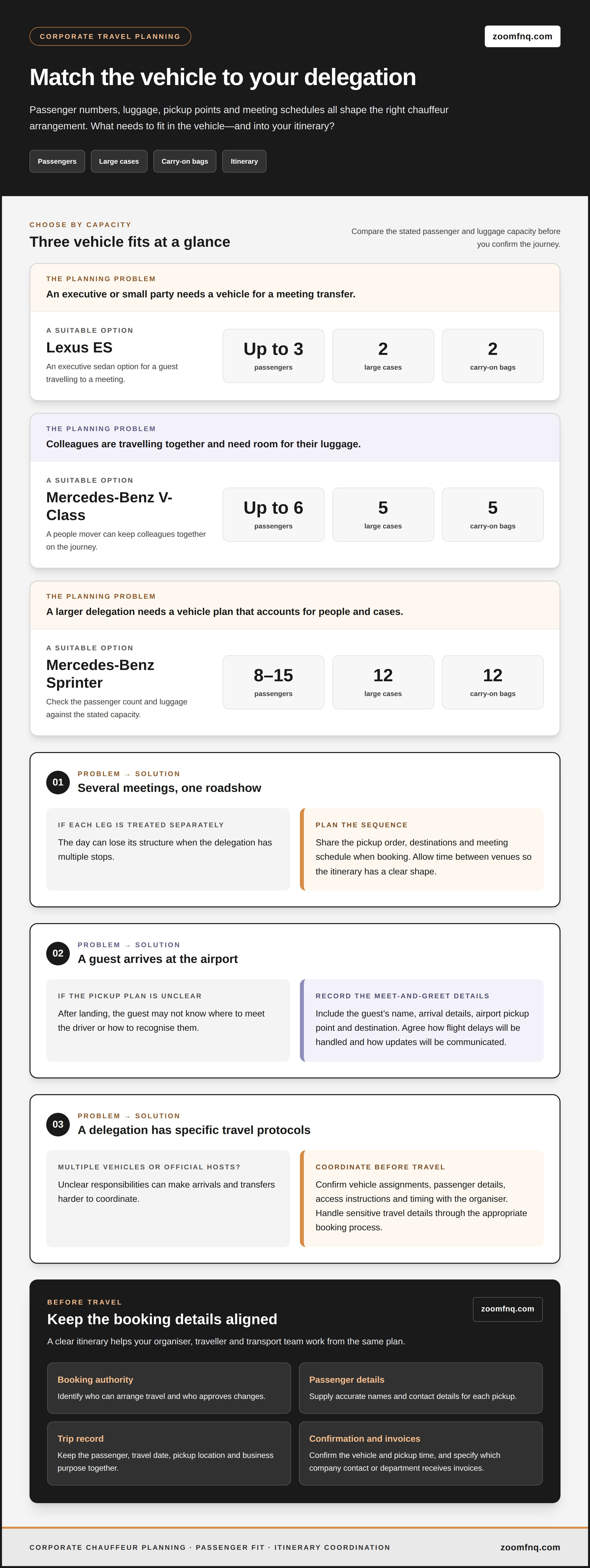
Executive and Business Class options can include sedans, SUVs and people movers. Match the vehicle to passenger numbers, luggage and the impression you want to create. A Lexus ES accommodates up to 3 passengers, with 2 large cases and 2 carry-on bags. A Mercedes-Benz V-Class accommodates up to 6 passengers, with 5 large cases and 5 carry-on bags. A Mercedes-Benz Sprinter can accommodate 8-15 passengers and carry 12 large cases and 12 carry-on bags.
For a roadshow, plan each stop around the delegation’s schedule. A pre-booked vehicle following a multi-stop itinerary can help organise transfers between meetings. Allow time between venues, and provide the pickup sequence and destination details when booking. This gives the day a clear structure instead of treating each leg as a separate trip.
Executive and VIP Client Hosting
Hosting executive or VIP clients involves more than choosing a premium vehicle. Consider who will meet the guest, where pickup will take place and how each journey fits the visit. A sedan may suit an individual travelling to a meeting, while a people mover can keep colleagues together. Comfort, presentation and clear coordination all shape the guest’s experience.
For an airport transfer, include the guest’s name, arrival details and destination when booking. A clear pickup plan helps reduce uncertainty after landing. If a senior guest has several appointments, align each transfer with the meeting schedule and communicate changes through the agreed booking channel.
Delegation Transport Protocols
For government or international delegations, coordinate vehicle assignments, passenger details, access instructions and timing with the organiser. The itinerary should show who is travelling together and where arrivals need to be planned. Handle sensitive travel details through the appropriate booking process, and give the chauffeur the instructions needed for each transfer.
Operational protocols depend on the organiser, destination and event arrangements. Clarify responsibilities before travel, especially when the programme includes multiple vehicles, meeting venues or official hosts. This helps keep pickups orderly without assuming every delegation follows the same procedure.
Airport Meet-and-Greet and Flight Delays
A meet-and-greet plan should identify the airport pickup point, the passenger’s name and how the driver and traveller will recognise one another. Agree on how to handle flight delays and adjust pickup timing if an incoming flight arrives late. Record the process with the booking so the organiser and traveller know how updates will be communicated.
Chauffeur services differ from taxis and rideshare because they are pre-booked around a planned itinerary and vehicle. A private chauffeur transfer includes a professional driver, while taxis and rideshare generally connect passengers with available trips. The specific arrangements depend on the booking.
Corporate chauffeur services operate in Australian cities and regional centres. Fleet choices and journey arrangements vary across locations. Services for corporate delegations can include airport pickups, executive transfers, multi-stop roadshows and group transport, arranged around the itinerary and the delegation’s needs.
For an airport arrival, include the pickup point and destination in your airport transfer booking, so the journey details align with your delegation’s schedule.
Vehicle options for individuals and groups
Choose a vehicle based on the delegation’s passenger numbers, luggage and itinerary. An executive arriving for a meeting has different transport needs from colleagues travelling together. Consider vehicle category, seating and luggage space together rather than choosing on appearance alone.
A sedan can suit an individual executive or a small party, while an SUV or people mover may better fit a different group or luggage load. For example, a Lexus ES accommodates up to 3 passengers and carries 2 large cases and 2 carry-on bags. A Mercedes-Benz V-Class accommodates up to 6 passengers, with space for 5 large cases and 5 carry-on bags.
For a larger delegation, a Mercedes-Benz Sprinter accommodates 8-15 passengers and carries 12 large cases and 12 carry-on bags. These capacities help show why passenger numbers alone don’t settle the choice. A group with presentation materials, oversized luggage or equipment should account for those items when selecting a vehicle.
For a conference transfer, decide whether keeping colleagues together is more useful than arranging separate vehicles. A people mover or minibus may suit a group travelling on one schedule, while separate sedans can work for individual arrivals or different appointments. The right arrangement depends on who is travelling together, where they need pickup and how much luggage they have.
- Individual executive: Consider a sedan and check its passenger and luggage capacity.
- Small delegation: Compare a people mover or van against the group’s baggage needs.
- Larger party: Consider a minibus and account for all passengers and equipment.
A corporate account can help organise repeat bookings, but each journey still needs a vehicle suited to its passengers. For example, a group arriving together may need a different arrangement from executives landing separately. Provide the organiser with passenger numbers, pickup points, destinations and luggage details for each trip.
For a day with several meetings, consider how passengers will travel between stops and whether they need to stay together. One vehicle may suit a shared itinerary. Separate journeys may work better when attendees have different pickup times or destinations.
Before confirming a booking, compare the planned vehicle’s seating and luggage capacity with the delegation’s actual requirements. Include work equipment and any child-restraint needs in the booking details. This helps match the vehicle to the group’s plans rather than relying on a category name alone.
Cancellation terms and customer support
A delegation itinerary can change when flights, meetings or event schedules shift. Before confirming transport, read the booking’s cancellation terms and note how to change or cancel a journey. Clarify how much notice is required, when a change takes effect and what happens to linked pickups. This matters when cancelling one journey could affect several passengers.
A delayed flight can affect both the scheduled pickup and the group’s next meeting. Flight updates can help the transport team adjust the plan, but they do not replace the booking’s cancellation terms. Confirm how delays and itinerary changes will be handled, and which contact method to use for updates.
If you need to cancel, include the journey, passenger or delegation, pickup point and scheduled time in the update. These details help distinguish one cancelled transfer from other trips in the same corporate itinerary. If the plan includes several vehicles or stops, specify which parts have changed. A precise update reduces confusion for the organiser and chauffeur.
Customer support is also about clear ownership. A corporate travel coordinator should know where booking updates are sent and who is responsible for passing them to travellers. For example, if an executive’s meeting runs late, the organiser can provide the revised pickup time and location through the stated booking channel. An instant acknowledgement can help the coordinator know the message has arrived, while the confirmed change should be recorded clearly.
Delegations travelling in people movers need the same careful coordination as individual travellers. If a group’s flight changes, the organiser should send revised arrival details for everyone affected. This gives the transport team the right context for the pickup. Make clear whether the update cancels the whole booking or changes only one passenger’s journey.
- Before travel: Keep the cancellation procedure with the booking confirmation.
- When plans change: Identify the affected journey, passenger and pickup details.
- For flight changes: Share updated arrival information through the stated channel.
- After an update: Keep a record of the revised itinerary and acknowledgement.
Clear cancellation terms and support processes help a business manage changing plans. For a multi-stop business day, keep the booking record, passenger updates and revised schedule aligned. This helps the organiser communicate changes and the transport team follow the latest itinerary.
Chauffeur professionalism and punctuality
When choosing a chauffeur for an Australian corporate delegation, check the driver’s professionalism, safety standards, local knowledge and booking process. Confirm how the pickup, itinerary changes and luggage requirements are coordinated before travel.
Professional service starts before the vehicle arrives. The chauffeur needs the booking details required to identify the passenger, pickup point and destination. An airport arrival followed by a meeting transfer, for example, needs clear instructions for both legs. This helps the driver and organiser follow the same itinerary.
Punctuality starts with a workable schedule. Include flight details, meeting times, venue addresses and planned stops in the booking. For a roadshow, allow time for passengers to board and luggage to be loaded. A tightly packed itinerary can leave little room for delays between locations.
Agree on how to communicate changes. If an executive’s meeting runs late, the organiser needs a clear way to send the revised pickup time. The transport team can then follow the latest instruction rather than an earlier schedule. Record the change so the passenger and organiser have a shared reference.
Choose a vehicle that suits the delegation and occasion. A sedan may be appropriate for an individual executive, while a group may need a people mover with suitable seating and luggage capacity. Match the planned vehicle to the passenger list and bags, including presentation materials or other work equipment.
Professionalism also includes respectful passenger care. A chauffeur should follow the agreed pickup instructions, assist with luggage where appropriate and communicate courteously. For a visiting partner arriving in Australia, a calm greeting and clear directions can make the first transfer feel organised. These details matter alongside a polished vehicle.
- Booking: Confirm passenger names, pickup locations, destinations and itinerary changes.
- Safety: Ask how the service maintains its stated safety standards.
- Local knowledge: Consider familiarity with the relevant airport, venues and regional routes.
- Vehicle fit: Match the passenger group and luggage to the selected vehicle.
For travel across Australia, local knowledge can be especially useful when an itinerary includes unfamiliar venues or regional roads. A professional driver should have the journey details and understand the planned route. Your organiser can provide accurate addresses and timing, then keep the driver informed if the schedule changes.
Planning a Cairns-area journey? Arrange your transfer booking with the pickup, destination and passenger details ready.
Zoom FNQ
Zoom FNQ extends its trusted transport capabilities nationwide, supporting corporate delegations arriving in regional hubs like Cairns and travelling across Far North Queensland. Its transfer services cover key locations including Cairns Airport, Palm Cove, Atherton Tablelands and Mission Beach, providing a reliable regional transport option for corporate arrivals and multi-destination itineraries. As a family-owned business, Zoom FNQ brings a welcoming, service-focused approach to coordinating passenger details and destinations for enterprise clients. When planning a delegation’s travel across our service network, share the pickup point, destination, passenger numbers and luggage needs as part of the booking. This helps shape a seamless transport arrangement around your group’s requirements. For help planning your nationwide corporate journey, contact Zoom FNQ.
Plan the next delegation journey
Treat transport as part of the delegation’s arrival plan, not a last-minute detail. Decide who coordinates the booking, how passengers will receive pickup instructions and how changes reach the organiser. Choosing a professional chauffeur for a corporate delegation in Australia should start with the journey: who is travelling, the purpose of each transfer and the service your guests expect. A clear brief gives your transport provider a practical starting point and helps your team manage each handover. A considered arrival can also set a calm, professional tone for the visit.
For business travel in Far North Queensland, Zoom FNQ offers Cairns Airport Transfers, Cairns City Transfers and Palm Cove Transfers. As a family-owned business, Zoom FNQ brings a personal, locally grounded approach to regional journeys. Share your itinerary and passenger requirements to begin planning. Contact Zoom FNQ to arrange corporate travel, and take the next step with confidence.
Frequently Asked Questions
What vehicle types and group sizes can Australian corporate chauffeur services accommodate?
Options can include sedans, SUVs, people movers, vans and minibuses, with capacity depending on the specific vehicle and luggage. Market examples include sedans for up to 3 passengers, a people mover for up to 6, and a Mercedes-Benz Sprinter for 8-15. Treat these as examples, not a guarantee of a particular vehicle. Share passenger numbers and baggage requirements so the booking suits the group.
What services are included in corporate chauffeur and delegation transfers in Australia?
A professional chauffeur for a corporate delegation in Australia means a pre-booked vehicle and professional driver following an agreed itinerary. A booking can cover an airport pickup, transport between accommodation and meetings, or a group transfer. Clarify which journeys are included, whether the group will travel together and how itinerary changes will be communicated before travel.
What licences, insurance, and safety standards must chauffeur operators meet in Australia?
Licence and insurance requirements depend on the jurisdiction and passenger transport arrangement, so rules may differ across Australia. For a corporate booking, clarify the operator’s applicable authorisations, passenger transport insurance and safety procedures. If a transport partner is involved, establish which operator is responsible for the journey. A polished vehicle or chauffeur title alone does not explain these arrangements.
How can a professional chauffeur provider help a company book and manage transport for a corporate delegation?
Zoom FNQ provides pre-booked private transfers, corporate travel and small group transport, with vehicle options including sedans, SUVs, people movers and minibuses. Share the organiser’s contact details, passenger numbers, pickup points, destinations and luggage requirements when arranging transport. For a multi-leg schedule, group journeys by traveller or event and nominate who will communicate changes. Contact Zoom FNQ to discuss a corporate transfer or charter for your delegation.
How much does a professional chauffeur cost in Australia for corporate travel?
Corporate fares are fixed and include tolls, parking and GST. The fare is provided in the written booking confirmation.
Which Australian cities offer corporate chauffeur services for visiting delegations?
Services operate in Australian cities and regional centres. Gold Coast conference groups can travel in vans seating up to 11 passengers.
Related posts


Leave a Comment